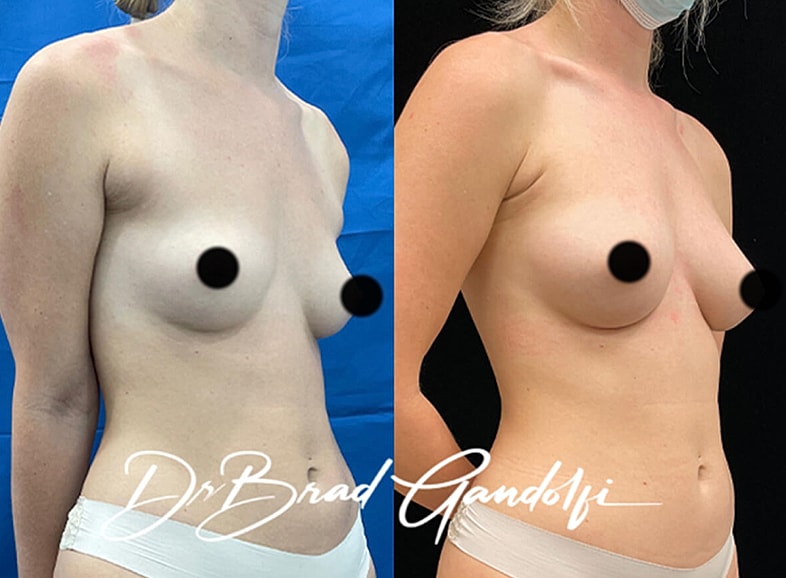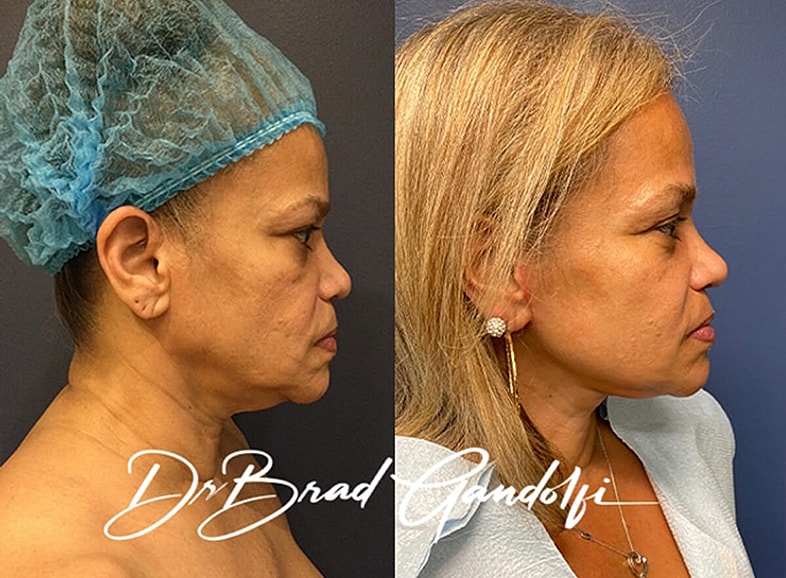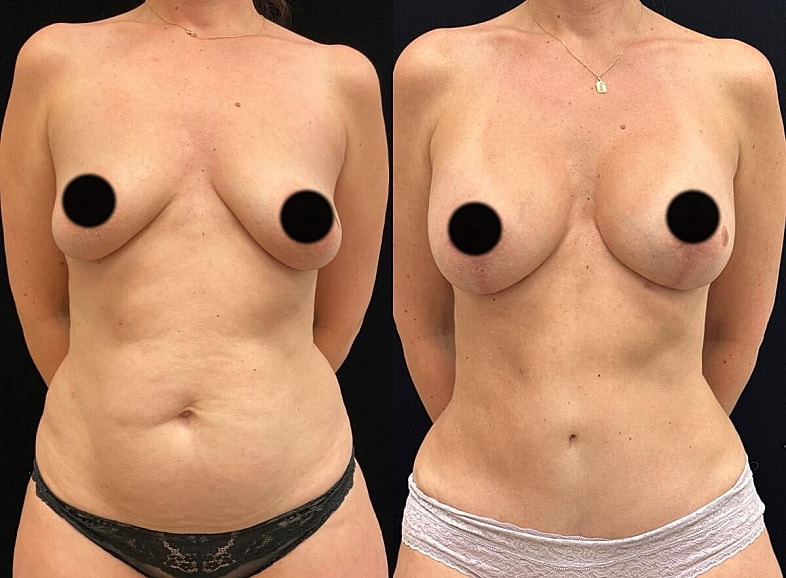


After pregnancy or significant weight changes, the abdominal muscles may separate, resulting in a visible bulge or weakness in the midsection. This condition, known as diastasis recti, can impact your posture, comfort, and confidence. This can also be associated with a hole in the abdominal wall, called a hernia, which can show up as an “outie” belly button. Diastasis repair and/or hernia repair surgically restores the integrity of the abdominal wall by bringing the separated rectus muscles back together.
Brad Gandolfi MD, FACS, designs every repair to reestablish function and form with precision. As a double board-certified plastic and reconstructive surgeon, Dr. Gandolfi combines technical expertise with a refined eye for contour, ensuring that each repair restores both strength and aesthetics.
Diastasis repair is a surgical procedure that corrects the separation of the rectus abdominis muscles, the paired vertical muscles that run down the center of the abdomen. When stretched apart due to pregnancy, weight fluctuation, or genetics, these muscles cannot realign on their own.
During diastasis repair, Dr. Gandolfi meticulously sutures the separated muscles back into their natural position, restoring the abdominal wall’s strength and tension. The result is a flatter, firmer abdomen that functions properly and appears more contoured.
This procedure can be performed on its own or as part of a tummy tuck or mommy makeover to address both muscle integrity and other concerns like excess skin or stubborn fat.


Diastasis repair is performed under general anesthesia in a fully accredited surgical setting. This is performed most often at the same time as a tummy tuck. Therefore, the incision is similar to a C-section incision and the length of the incision is related to the amount of excess skin present. Through this incision, he carefully separates the skin and tissue from the abdominal wall to expose the rectus muscles.
The separated muscles are then brought back together using durable internal sutures, creating a reinforced internal “corset.” The procedure typically takes two to three hours, and most patients can return home on the same day. Dr. Gandolfi’s precise technique minimizes tension on the incision line, resulting in a refined and natural outcome.
Diastasis repair is most commonly performed to correct:
By reuniting the rectus muscles, the procedure restores functional stability and smooths the abdominal silhouette for both aesthetic and physical improvement.
Diastasis repair offers both cosmetic and functional improvements. It restores the integrity of the core muscles, supports better posture, and enhances the visual contour of the abdomen. Patients often notice relief from back pain and core instability as well as improved confidence in their physical appearance. For many, diastasis repair represents a return to balance, where strength and symmetry meet in harmony.

You may be a good candidate for diastasis repair if you:
Dr. Gandolfi will assess your anatomy and medical history to determine if diastasis repair, or a combination with tummy tuck surgery, best meets your goals.

Most patients return to normal activities within two to four weeks, depending on their comfort and lifestyle. A compression garment may be worn to support the abdomen and reduce swelling. Strenuous activity and heavy lifting should be avoided for at least six weeks.
Dr. Gandolfi’s meticulous technique minimizes discomfort and recovery time, enabling patients to resume their daily lives with renewed strength and confidence.



Once healed, patients experience a flatter, smoother, and more toned abdomen. Restored alignment of the rectus muscles enhances posture, stability, and functional strength. Results are long-lasting, provided a healthy lifestyle and stable weight are maintained. Most patients report both aesthetic and physical improvement that continues to refine over several months as swelling subsides and tissues adapt.
Dr. Brad Gandolfi’s extensive training in plastic and reconstructive surgery at Duke University and UCLA gives him a deep understanding of anatomy, structure, and proportion. His advanced approach to diastasis repair combines surgical precision with an artistic sense of contour, producing results that are both functional and refined. Rebuild strength, structure, and confidence with diastasis repair performed by Dr. Brad Gandolfi in NYC.

Mild separation can sometimes improve with targeted core exercises, but true diastasis recti typically requires surgical repair for lasting correction.
Not exactly. A tummy tuck often includes diastasis repair, but it also removes excess skin and fat. Standalone diastasis repair focuses solely on the separation of the muscles.
Incisions are placed low on the abdomen and typically heal as thin, discreet lines that fade over time.
It’s recommended to wait at least six months after childbirth and until weight and hormones stabilize before considering surgery.
Yes. Many patients experience improved posture, core stability, and relief from lower back pain once the abdominal wall is restored.
Results are permanent if you maintain a healthy lifestyle and avoid significant weight fluctuations or additional pregnancies.